 Image 1 of 1
This is a pre order listing current wait list is 2 to 3 weeks
6 eggs
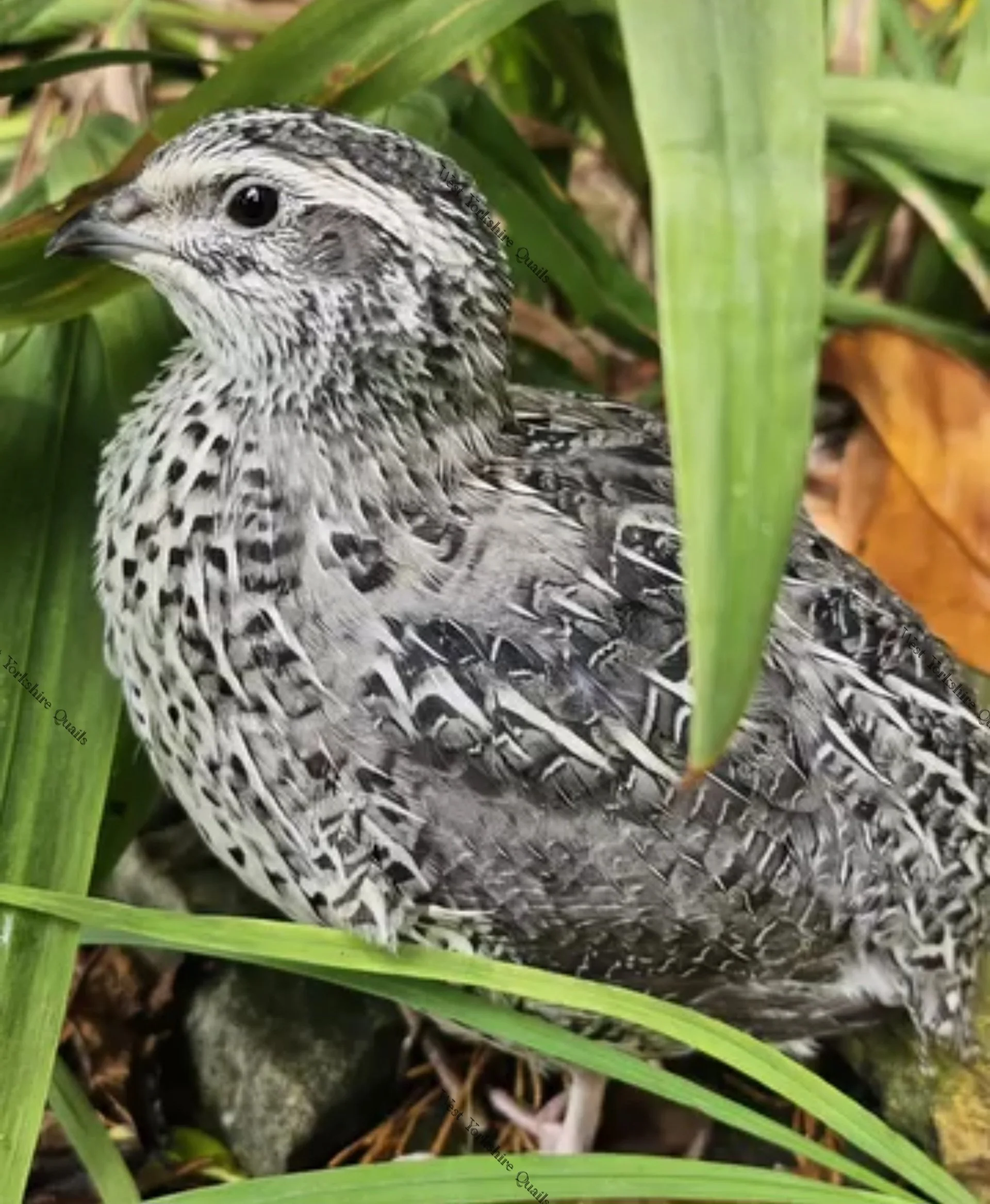
The Fee gene is one of the most distinctive colour mutations found in domestic Coturnix quail (Coturnix japonica). It dramatically changes feather colour by removing much of the bird's red and brown pigmentation while preserving black pigment. The result is an attractive range of silver, grey, black, and white plumage.
Genetics of the Fee Gene
The Fee gene is inherited as an autosomal incompletely dominant mutation. This means it is not sex-linked, and a single copy of the gene produces a visible effect while two copies produce a stronger version of the trait.
Fee/fee+ (heterozygous): Brown and red pigments are diluted, producing a grey or silver appearance while retaining the original feather pattern.
Fee/Fee (homozygous): The dilution is much stronger, producing birds that are almost entirely shades of black, white, and grey with very little remaining warm colour.
How the Fee Gene Works
Unlike many colour mutations that alter feather patterns, the Fee gene primarily affects pigment production.
Specifically, it reduces pheomelanin (red and brown pigment) while leaving eumelanin (black pigment) largely unaffected. Because the feather pattern itself remains intact, the original markings are still present but appear in monochrome shades of grey, silver, black, and white instead of brown and tan.
This is a pre order listing current wait list is 2 to 3 weeks
6 eggs
The Fee gene is one of the most distinctive colour mutations found in domestic Coturnix quail (Coturnix japonica). It dramatically changes feather colour by removing much of the bird's red and brown pigmentation while preserving black pigment. The result is an attractive range of silver, grey, black, and white plumage.
Genetics of the Fee Gene
The Fee gene is inherited as an autosomal incompletely dominant mutation. This means it is not sex-linked, and a single copy of the gene produces a visible effect while two copies produce a stronger version of the trait.
Fee/fee+ (heterozygous): Brown and red pigments are diluted, producing a grey or silver appearance while retaining the original feather pattern.
Fee/Fee (homozygous): The dilution is much stronger, producing birds that are almost entirely shades of black, white, and grey with very little remaining warm colour.
How the Fee Gene Works
Unlike many colour mutations that alter feather patterns, the Fee gene primarily affects pigment production.
Specifically, it reduces pheomelanin (red and brown pigment) while leaving eumelanin (black pigment) largely unaffected. Because the feather pattern itself remains intact, the original markings are still present but appear in monochrome shades of grey, silver, black, and white instead of brown and tan.